Dunes & Dreams | Health & Wellness
Imagine one of those days when everything happens at once. Work is demanding, your phone won’t stop ringing, there are bills to pay, and perhaps a difficult conversation with someone you love.
By the time you get home, you’re exhausted, but your mind refuses to switch off.
Someone suggests meditation. You’ve read about mindfulness, box breathing and relaxation techniques, so you sit down, close your eyes, and try to clear your mind.
Thirty seconds later, you’re thinking about tomorrow’s meeting. You open your eyes and think, “Well, that didn’t work.”
Meditation is a skill
But perhaps it isn’t that you can’t meditate. Perhaps you haven’t learned how yet.
Meditation isn’t a test of how quickly you can stop thinking. It’s a skill, and like many skills, it can develop with practice and guidance.
An experienced meditation guide like Nicky can help you settle comfortably, notice tension in your shoulders or jaw, become aware of your breathing, and gently return your attention when your mind wanders.
That’s important.
Getting distracted isn’t a failure. Noticing the distraction and returning to the present moment is part of the practice.
What changed for me
I know this from personal experience.
There was a time I felt quite conflicted about my business and personal life. I’d read articles, genuinely wanted to quieten my thoughts, sat cross-legged on my bed imagining roots growing into the earth and light flowing through me.
Sometimes I felt grounded for about five minutes, then the worries came rushing back.
My experience changed when I attended a guided session with Nicky.
What struck me was how she seemed to notice when I became tense or distracted. She gently brought my attention back to my breath and to the sounds around me.
At times I could feel my heart racing, followed by moments of genuine calm. Having someone there to guide me through those changing sensations made an extraordinary difference.
Now, when I meditate alone, I’m beginning to understand that a wandering thought doesn’t mean I’ve failed. I can notice it and return to my breath.
Have I mastered meditation? Not remotely.
I still have a great deal to learn and I want to return for more guided sessions. But I have learned that reading about a technique and being personally guided through it are two very different experiences.
Why returning can help
That brings me to something we often overlook.
One guided session can be a wonderful introduction, but it doesn’t mean you’ve mastered the practice. You go home and the next evening your mind might be just as busy as before.
That’s where regular practice and follow-up sessions can help.
You can discuss what happened while practising on your own, explore other approaches and gradually discover what works for you.
Perhaps focusing on the breath helps. Perhaps a body scan is more useful when you’re physically tense. Over time, you may become more confident practising independently.
You don’t need to return indefinitely and there’s no magic number of sessions, but the opportunity to return, ask questions and refine your technique can be valuable.
Where coaching comes in
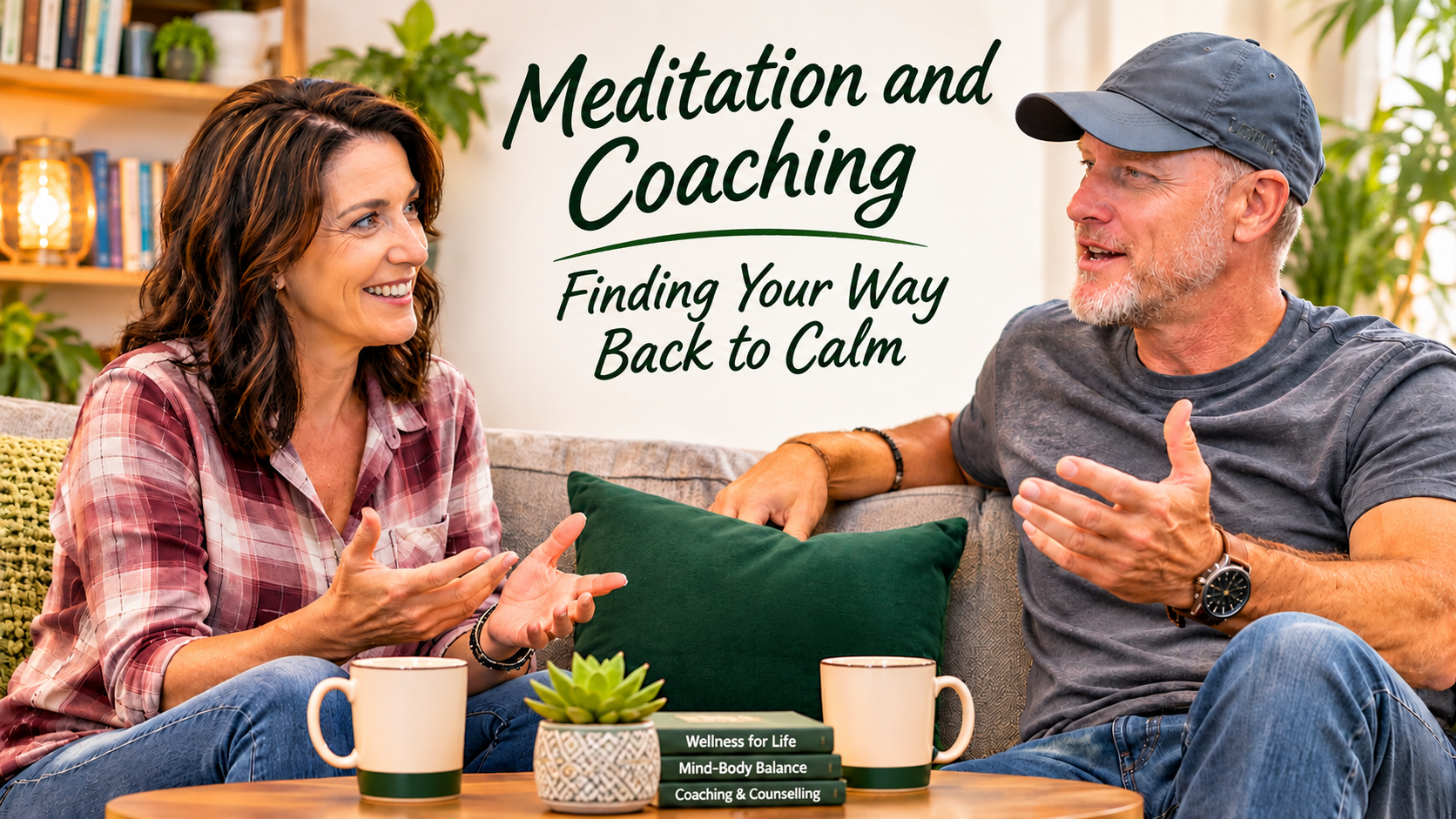
And there’s a parallel here with coaching and counselling.
Sometimes we believe we’re stressed simply because we have too much work. Yet, in a thoughtful conversation, we may begin to notice something beneath that pressure.
Perhaps we struggle to say no. Perhaps criticism affects us deeply. Perhaps we’re afraid of disappointing other people.
Coaching can help us recognise patterns and consider practical ways to respond differently. Meditation can give us space to notice our thoughts and feelings without being swept along by them.
That doesn’t mean we should sit down to meditate and force ourselves to solve a problem. Sometimes the best thing we can do is simply breathe and allow ourselves a moment of quiet.
But when reflection does bring something into focus, a later conversation can help us make sense of it.
Bringing it into everyday relationships
Take relationships, for example.
Work pressures and personal worries rarely stay neatly separated. Perhaps we’re less patient with our partner because we’re anxious about money. Or we withdraw from conversations because we’re emotionally exhausted.
We might tell ourselves, “They don’t understand me anymore,” but have we taken the time to understand what we’re feeling?
Meditation may help us recognise frustration or sadness before reacting. A coaching or counselling conversation may help us find words for those feelings and communicate more constructively.
Instead of making an accusation, we might say:
“I’ve been feeling disconnected lately, and I’d really like us to make time to talk.”
The circumstances haven’t necessarily changed, but the way we approach them has.
A practice to carry with you
Neither meditation nor coaching is a cure-all. Neither replaces appropriate mental healthcare when someone needs it. But for everyday pressures, learning to pause and reflect can make a meaningful difference.
What I particularly appreciate about working with someone like Nicky is that the objective isn’t simply to feel relaxed for an hour. It’s to begin learning a skill you can carry into everyday life.
Follow-up sessions offer a chance to practise, talk about difficulties and build confidence.
The same can be true of coaching. We rarely change long-established habits through one conversation. We notice something, reflect on it, try a different response and sometimes return to explore what we’ve learned.
Progress isn’t measured by perfect meditation sessions or by having an answer to every question.
Some days the mind settles easily, other days it races. The practice is learning how to return, again and again, with a little more patience.
Meditation teaches us to pause. Coaching helps us make sense of that pause. And together they can change how we show up in our lives.
Would you like to talk?
Do you find it difficult to switch off, or wonder whether guided meditation or coaching might help you?
Send Nicky a question, or leave a reply below.
You do not need to have everything worked out before starting the conversation.
This article offers general wellbeing guidance and is not a substitute for individual medical or mental-health advice.