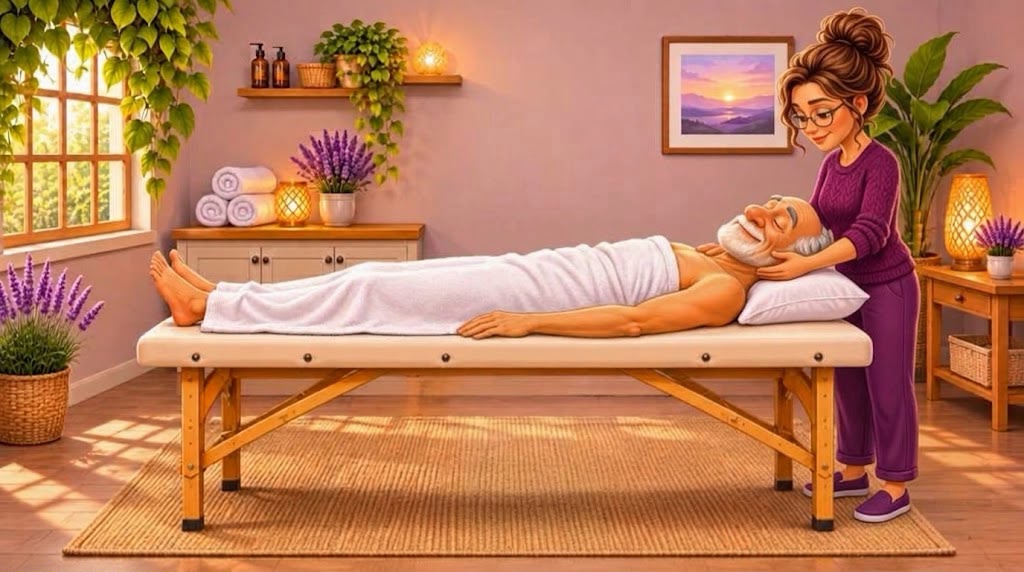
From everyday stiffness to tension after work or exercise, learn to listen to your body and understand when appropriate bodywork may help—and when to seek professional advice.
Read the full article
Your Body Is Talking. Are You Listening?
From aching knees and stiff backs to swollen ankles and everyday stress — why the right massage, from the right person, can make a difference.
Dunes & Dreams | Health & Wellness
Have you ever climbed out of bed in the morning and wondered why everything seems to ache?
Perhaps your knees complain when you stand up. Your back reminds you of yesterday’s round of golf. Your shoulders feel as though they have been carrying the weight of the world, or your feet and ankles seem heavier and more swollen than usual.
Maybe you’re a cyclist who loves getting out into nature, but your neck and lower back aren’t quite as enthusiastic afterwards.
Or perhaps you spend your days behind a computer, rushing between meetings, sitting for hours, and wondering why your body feels exhausted when you’ve barely moved.
We often dismiss these discomforts as part of getting older, working too hard or simply being out of shape.
But here’s a question worth asking:
What if your body is trying to tell you something, and you’ve become so accustomed to the discomfort that you’ve stopped listening?
A Massage Isn’t Always Just a Massage
When most people think of massage, they picture an occasional luxury. A relaxing hour at a spa, a little pampering, perhaps something to celebrate a birthday or anniversary.
And there is absolutely nothing wrong with that.
But massage can also have a more practical role in supporting physical comfort, muscular recovery, relaxation and everyday wellbeing.
A suitably trained therapist can adapt techniques and pressure to your individual circumstances.
Massage may provide short-term relief from certain types of muscular discomfort and help people feel more relaxed. It is not a cure for underlying medical conditions, and its effectiveness varies depending on the problem.
The important distinction is between receiving a standard relaxation routine and choosing a treatment that takes your particular concerns into account.
Because your body isn’t the same as everybody else’s. And your treatment shouldn’t automatically be either.
1. Your Back, Neck and Shoulders: The Everyday Complaints
Think about how much time we spend sitting.
At a desk. Behind the steering wheel. On the couch. Looking down at our phones.
It’s hardly surprising that our muscles sometimes protest.
Common complaints include:
- Stiff or aching neck
- Tight shoulders
- Upper-back tension
- Lower-back muscular discomfort
- Tightness between the shoulder blades
- Muscular soreness after long periods of driving
- Tension around the temples
- Jaw clenching and facial muscle tightness
- Difficulty getting comfortable after sitting for hours
How might massage help?
Appropriate soft-tissue massage may temporarily relieve muscular discomfort, encourage relaxation and improve the feeling of comfortable movement.
Gentle stretching, movement breaks and advice about changing positions can complement the treatment.
However, persistent or worsening pain, particularly with numbness, weakness or other concerning symptoms, requires medical assessment rather than simply stronger massage.
2. Those Knees, Hips and Legs: Getting Older Doesn’t Mean Giving Up
One of the greatest challenges of ageing is not necessarily pain itself, but what discomfort prevents us from doing.
Walking around the garden. Playing with grandchildren. Enjoying a round of golf. Taking the dog for a walk. Getting up from a favourite chair without feeling stiff.
Common concerns include:
- Aching knees
- Stiff hips
- Tight thigh muscles
- Calf discomfort
- Lower-back stiffness
- Muscular discomfort associated with arthritis
- Tired legs after walking
- Foot discomfort after standing
- Reduced confidence in comfortable movement
- General muscular stiffness after inactivity
How might massage help?
Gentle, appropriately adapted massage may ease muscle tension surrounding uncomfortable joints, support relaxation and make everyday movement feel more comfortable.
For someone living with osteoarthritis, massage may offer short-term symptom relief, but it cannot reverse joint damage or replace appropriate exercise, rehabilitation or medical care.
For older clients, treatment needs to consider skin sensitivity, medication, balance, bone health and existing medical conditions.
Sometimes a softer touch is more appropriate than deep pressure.
The goal isn’t to make someone feel twenty again. It’s to help them remain as comfortable, active and independent as possible.
3. Golfers, Cyclists, Walkers and Weekend Warriors
You don’t have to be a professional athlete to know what sore muscles feel like.
A beautiful day on the golf course can leave your lower back stiff.
A mountain bike ride can create tension in your shoulders, neck, hips and legs.
Even a long walk can remind you that certain muscles haven’t been used quite as much as they should.
Common sporting complaints include:
- Lower-back muscular discomfort after golf
- Shoulder and neck tension
- Tight hips
- Sore quadriceps after cycling
- Tight hamstrings
- Calf soreness
- Tired feet
- Muscular stiffness after exercise
- General post-exercise muscle soreness
How might sports-focused massage assist?
Massage may help reduce perceived post-exercise soreness and improve comfort during recovery.
A therapist can adapt the session to the muscles most affected by your activity.
However, massage does not repair a torn ligament, correct a damaged joint or replace medical evaluation of a significant sporting injury.
Sometimes what feels like ordinary muscle soreness needs a different kind of attention.
4. Swollen Feet, Heavy Legs and Fluid-Related Discomfort
This is an area where careful assessment becomes particularly important.
Some people experience:
- Swollen ankles
- Puffy feet
- Heavy or uncomfortable legs
- Persistent swelling after certain surgical procedures
- Swelling associated with diagnosed lymphoedema
- Tissue tightness associated with fluid accumulation
- Swelling or tenderness associated with lipoedema
It is important to understand that not all swelling is caused by the same problem.
Swelling may be associated with prolonged sitting, venous circulation problems, medication, injury, infection, heart or kidney conditions, or problems affecting the lymphatic system.
That is why unexplained swelling should not automatically lead to a massage booking.
What is Manual Lymphatic Drainage?
Manual Lymphatic Drainage, often called MLD, is a specialised, very gentle hands-on technique used in certain situations to assist the movement of lymphatic fluid.
For appropriately diagnosed lymphoedema, MLD may form part of a broader treatment programme that can also include compression, exercise and skin care.
It is not simply an ordinary massage performed with lighter pressure, nor is it suitable for every type of swelling.
In selected medically assessed clients, specialised techniques may support fluid management and comfort.
For lipoedema, gentle approaches may sometimes be used for symptom comfort, particularly where lymphatic swelling also exists, but they do not remove the abnormal fat tissue associated with the condition.
An important warning: A suddenly swollen leg, especially one that is painful, red or warm, may indicate a blood clot or another urgent medical problem. It should not be massaged. Swelling accompanied by chest pain or breathlessness requires emergency medical care.
This is one of the clearest examples of why proper screening and specialist training matter.
5. Stress, Exhaustion and the Body That Never Switches Off
Stress is not only something we experience emotionally.
It can affect how we breathe, how we sleep, how tightly we hold our shoulders and how difficult it feels to relax.
Think about the person who spends the entire day answering calls, meeting deadlines, dealing with family responsibilities and worrying about tomorrow.
By bedtime, their mind is exhausted, but their body still feels tense.
Common experiences include:
- Tight shoulders
- Jaw clenching
- Neck tension
- Difficulty relaxing
- Restlessness at bedtime
- General muscular tightness
- Feeling physically wound up
- Tension associated with demanding workdays
Relaxation-focused massage may help people feel calmer and temporarily relieve physical tension.
For some, a regular opportunity to disconnect and relax becomes an important part of their wellbeing routine.
Massage is not a treatment for an underlying anxiety disorder, depression or chronic insomnia, but it may be a useful complementary relaxation activity.
6. Headaches, Jaw Tension and Facial Discomfort
Many people don’t realise how much tension they carry around their jaw, temples and neck.
Some clench their teeth while concentrating. Others wake with tight jaw muscles or experience tenderness around the sides of the face.
These symptoms may be associated with temporomandibular disorders, commonly called TMD.
Appropriately trained practitioners may use gentle jaw-muscle techniques and other conservative approaches to help selected clients with muscular tension.
However, persistent jaw pain, locking, dental problems or unusual headaches should be assessed by an appropriate healthcare professional.
Not every headache comes from muscular tension.
7. Gentle Support During Recovery and Later Life
There are times when the body needs particularly careful handling.
These may include:
- Recovery after surgery
- Living with osteoporosis
- Managing chronic arthritis
- Living with neurological conditions
- Experiencing age-related frailty
- Receiving or recovering from cancer treatment
- Managing reduced sensation or sensitive skin
- Living with long-term mobility limitations
For suitable clients, carefully adapted massage may provide relaxation, comfort and a sense of personal wellbeing.
But these are also circumstances where a thorough health history, appropriate training and coordination with medical professionals are particularly important.
Some people may require specialist rehabilitation, medical clearance or techniques that fall outside an individual massage therapist’s scope of practice.
8. Why the Experience and Training of Your Therapist Matter
Let’s talk about something people don’t always consider when booking a massage.
Price is easy to compare. Professional judgement is much harder to see.
There are excellent therapists in spas, wellness centres, private practices and massage chains. A lower price does not automatically mean poorer treatment.
But when you are seeking help for a particular physical concern, it is worth looking beyond the price and asking about training, experience and the approach to individual assessment.
A responsible therapist should take time to understand:
- Where you are uncomfortable
- How long the discomfort has been present
- Whether there has been a recent injury
- Whether you have existing medical conditions
- Whether you take medication that may affect treatment safety
- What type of pressure you can comfortably tolerate
- Whether the symptoms suggest that massage may not be appropriate
A therapist cannot reliably diagnose the cause of your pain simply by feeling the muscles.
But an appropriately trained practitioner should be able to identify important warning signs, recognise the limitations of their own expertise and recommend medical assessment where necessary.
When Massage Could Make Things Worse
Massage is generally low risk for appropriately screened clients, but it is not risk-free.
Consider someone with osteoporosis receiving unnecessarily forceful pressure.
Or a person taking blood-thinning medication who is given vigorous deep-tissue work that causes significant bruising.
Consider an individual with an unrecognised blood clot who books a forceful leg massage because their calf feels swollen and uncomfortable.
These are situations where poor screening or inappropriate techniques could have serious consequences.
Recent fractures, acute injuries, certain infections, healing wounds and particular medical conditions may also require massage to be postponed, avoided in affected areas or modified.
The concern is not simply whether the therapist can provide a pleasant massage.
It is whether they have the knowledge and professional judgement to recognise when a treatment needs to change — or should not take place at all.
9. Sometimes the Best Treatment Is a Referral
Imagine visiting a therapist because your shoulder has been aching for weeks.
You assume it’s tension.
But during your discussion, the therapist learns that you have also developed significant weakness in your arm.
Rather than attempting to work the discomfort away with increasingly firm pressure, a responsible therapist recognises that medical evaluation is needed.
Or imagine an older client arriving with a newly swollen, painful leg.
The correct response is not to begin fluid-focused massage.
It is to recommend urgent medical assessment.
Knowing when not to massage is just as important as knowing how to massage.
This is one of the strongest reasons to choose a therapist who understands professional boundaries and puts client safety ahead of completing a booked appointment.
10. A More Personal Approach to Massage and Wellness
Perhaps the time has come to change the way we think about massage.
Instead of asking, “Which massage should I book?”, perhaps we should begin with a different question:
“What is bothering me, and what sort of help do I actually need?”
It might be stiff shoulders.
It might be an aching hip after golf.
It might be tired muscles after cycling.
It might be everyday tension from sitting behind a computer.
Or it might be a concern that needs medical attention rather than massage at all.
At Dunes & Dreams, we believe wellbeing begins with listening — to ourselves, to our bodies and to the people who help care for us.
Through Hands of Wellness and Kinetic Flow in Centurion, Nicky’s approach is centred on personalised comfort, gentle bodywork and understanding the individual’s needs.
The aim is not to promise a cure or suggest that every physical problem can be addressed through massage.
It is to start the right conversation, consider what is appropriate and encourage clients to seek medical care when necessary.
Because a truly valuable wellness experience begins long before someone lies down on the massage table.
It begins with listening.
Tell Us: What Is Your Body Trying to Tell You?
We would love to hear from our readers.
Perhaps you experience persistent neck tension, aching knees, stiff hips, heavy legs, post-exercise soreness or difficulty relaxing.
Maybe you have wondered whether massage could help but have never been quite sure what to ask for.
We are exploring a simple online questionnaire called:
“Tell Nicky Where It Hurts.”
The idea is to help people identify their everyday discomforts, understand when professional assessment is important and start a conversation about whether personalised bodywork might be suitable.
We would appreciate your thoughts.
Would you find a simple Yes/No wellness questionnaire helpful?
Would you prefer to describe your discomfort before choosing a treatment?
And would knowing that a therapist considers your medical history and individual circumstances make you more confident about booking?
Your feedback will help shape this new approach.
For general wellness enquiries:
Nicky | Hands of Wellness & Kinetic Flow
Centurion, Gauteng
WhatsApp: 076 157 2207
www.kineticflow.co.za
www.handsofwellness.co.za
Health information disclaimer: This article is for education and general wellbeing awareness. Massage and specialised manual techniques are not substitutes for medical diagnosis or treatment. Anyone with persistent, unexplained, worsening or concerning symptoms should seek appropriate medical advice. Specialised treatments must only be provided by appropriately trained practitioners.
Dunes & Dreams — Health & Wellness
Connect with Nicky
💬 Message Nicky directlyYour name and question stay unpublished until reviewed. Once approved, they can be read by everyone.
Ask a public question
3 reads0 likes0 dislikes
Sign in to comment, or use Ask a public question below.
Comments
One response to “Your Body Is Talking. Are You Listening”
[…] more in Health & Wellness, or read Your Body Is Talking. Are You Listening? for a complementary look at stress, tension and everyday body […]